
If you are comparing backup power options, you have probably wondered what actually happens on installation day. A standby unit is not something you plug in. It becomes part of your home’s electrical and fuel systems, so understanding the process helps you compare quotes and avoid surprises.
How Is a Generac Generator Installed? A Quick Overview
Generac is one of the best-known manufacturers of home standby units. Whatever the model, a standby generators installation follows a similar sequence:
- A site visit and electrical load assessment
- Permit and notification paperwork
- Preparing a pad and placing the unit
- Installing the transfer switch and wiring
- Connecting the fuel supply
- Inspection, start-up and testing
Each step involves different trades and requirements. In Barrie, the electrical work must be done by a licensed electrical contractor and is overseen by the Electrical Safety Authority (ESA). The gas connection must be completed by a qualified gas fitter, and the unit itself must be installed according to the manufacturer’s instructions and applicable codes.
Before Installation: Planning the Project
Most problems with a backup generator installation come from skipped planning, not from the physical work. Good planning usually covers three areas.
Load Assessment and Sizing
The electrician adds up the loads you want to keep running during an outage, such as the furnace, refrigerator, sump pump, lighting and a home office. Starting loads matter as well as running loads, because motors draw extra power when they start.
Panel and Wiring Review
The generator connects through your main electrical panel, so the panel’s condition and capacity matter. If the panel is full, outdated or showing signs of wear, electrical panel installation or an upgrade may be recommended before the generator goes in. Some homes also need house wiring services to regroup circuits so critical loads can be powered together.
Fuel Supply
Most residential standby units run on natural gas or propane. A natural gas unit depends on the existing meter and supply line being large enough for the added demand, and the utility may need to confirm this. A propane unit needs a tank sized for the runtime you want.
The Installation Process Step by Step
Step 1: Permits and Notification
Before work begins, the electrical contractor submits the required ESA notification or permit. Gas work follows its own requirements, and some municipalities have additional rules for placement. Confirm in writing who is handling each filing.
Step 2: Site Preparation and Pad
The unit sits outdoors on a level, stable base, often a composite or concrete pad. Placement must respect minimum distances from windows, doors, air intakes, property lines and combustible materials. It also needs room for servicing and enough airflow to run safely.
Step 3: Setting the Generator
Once the pad is ready, the unit is positioned and secured. The installer checks clearances against the manufacturer’s manual before any wiring begins.
Step 4: Transfer Switch Installation
The transfer switch is the component that moves your home’s power source from the utility to the generator and back. It also prevents power from flowing back onto the grid, which protects utility workers. Depending on the design, it may serve the whole panel or a smaller group of selected circuits.
Step 5: Wiring and Conduit
Wiring runs from the generator to the transfer switch and from the transfer switch to the panel. Control wiring allows the unit to detect an outage and start on its own. Correct conductor size, conduit and grounding are essential, which is why this stage is closely inspected.
Step 6: Gas Connection
A licensed gas fitter connects the fuel line, installs any required shut-off valves and tests for leaks. For propane, the tank is set and the regulator connected.
Step 7: Inspection, Start-Up and Testing
An ESA inspection confirms the electrical work meets the Barrie Electrical Safety Code. After approval, the installer starts the unit, simulates an outage and checks that the transfer switch operates correctly under load.
Installation Stages at a Glance
|
Stage |
Who Typically Handles It | What Happens | Typical Timing |
|---|---|---|---|
|
Site visit and load review |
Electrician | Assess panel, loads, location and fuel options | Hours to one visit |
|
Permits and notification |
Electrical contractor, gas fitter | File required paperwork | Days to weeks |
|
Pad and placement |
Installer | Prepare base and set the unit |
Part of one day |
| Transfer switch and wiring | Electrical contractor | Mount switch, run conduit and conductors |
One to two days |
| Gas or propane connection | Gas fitter | Connect fuel line and test |
Several hours to one day |
| Inspection and testing | ESA inspector, installer | Verify code compliance and simulate an outage |
Scheduling varies |
Total on-site time is often one to three days for a typical house, but equipment availability, permits, utility coordination and inspection scheduling can stretch the overall project to several weeks.
What Affects Cost and Timeline
Prices vary from one property to another. The main factors include:
- Generator size and model
- Transfer switch type and number of circuits
- Distance from the unit to the panel and the gas supply
- Whether the panel needs upgrading
- Site conditions such as slopes, rock or limited access
- Fuel type and any tank requirements
- Permit and inspection fees
A written estimate based on an on-site visit is more reliable than any figure quoted over the phone.
Questions to Compare Generator Installation Services
If you are in the commercial investigation stage, comparing contractors on the same points makes the decision easier. Consider asking each one:
- Are you a licensed electrical contractor, and what is your ESA/ECRA number?
- Who files the permits and arranges the inspection?
- Does the quote include the transfer switch, wiring, pad, permits and testing?
- Who handles the gas connection?
- What happens if the panel needs work?
- What does your warranty cover, and what does the manufacturer cover?
- Do you offer an electrical preventive maintenance service after installation?
Maintenance After Installation
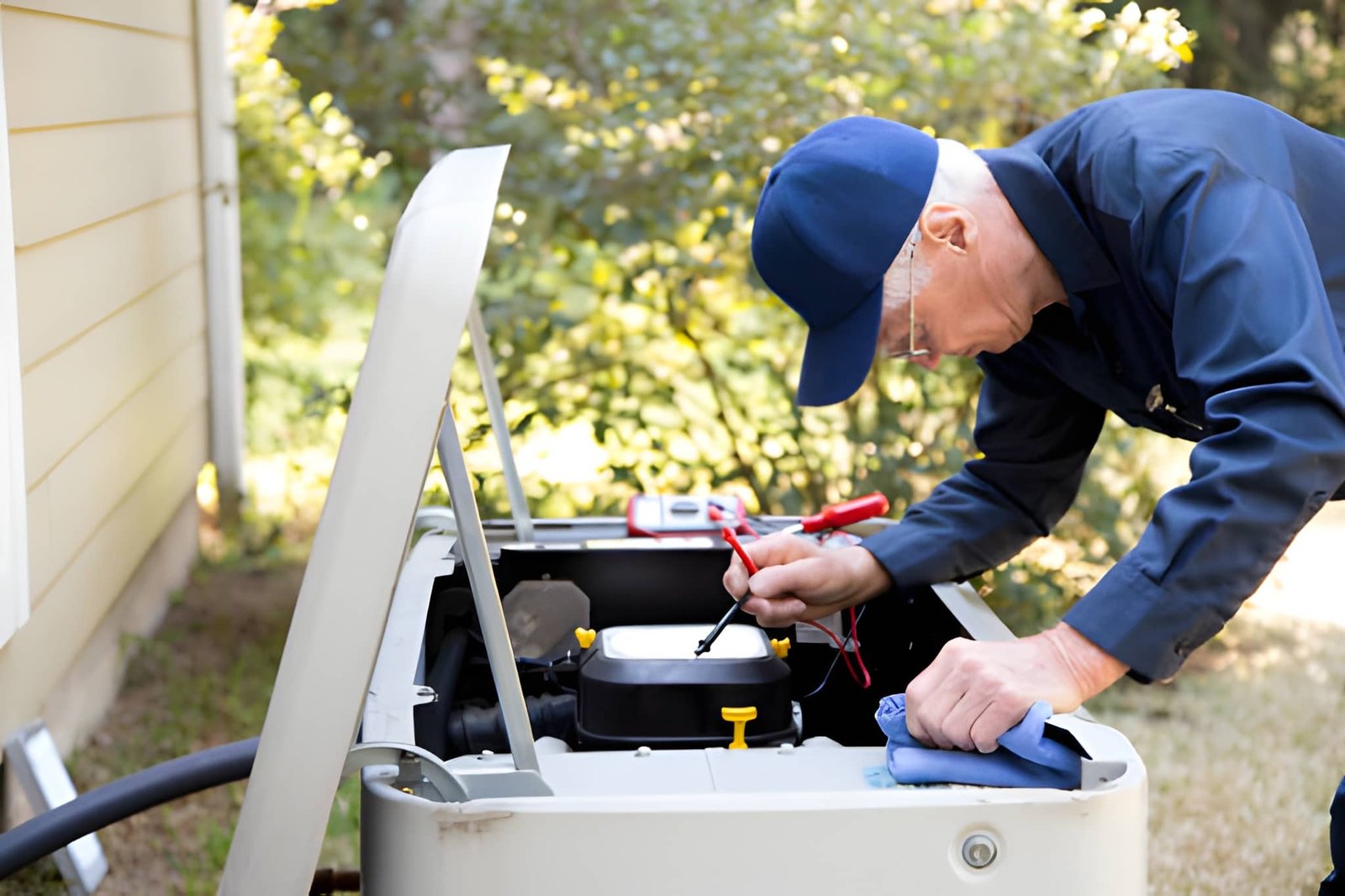
A standby generator needs routine care to start when you need it. Manufacturers generally recommend an annual service that includes oil and filter changes, battery checks, spark plug inspection and a loaded test.
Checking the transfer switch and panel at the same time is sensible, since they work as one system. Keep the area around the unit clear of snow, leaves and storage, and check the controller for fault messages occasionally.
Backup Power for Commercial and Industrial Properties
Larger properties follow the same overall process, but with more complexity. Commercial electrician services typically involve load studies, automatic transfer switches sized for the building and coordination with fire and safety systems.
Commercial electrical wiring and industrial electrical services may also include three-phase power, critical equipment protection and scheduled maintenance plans. If you manage a business, confirm that your contractor has experience at that scale.
Related Reading: 13 Questions to Ask an Electrician Before Hiring
Choosing the installer is as important as choosing the generator. Electrical Elite’s article 13 Questions To Ask An Electrician Before Hiring Them offers a practical checklist you can use during interviews.
It recommends writing down your questions and asking every candidate the same ones so you can compare answers fairly. The questions cover experience, licensing and certification, familiarity with your type of electrical system and whether the electrician specializes in your kind of project.
They also cover liability insurance, coverage for employees and contractors through WSIB, billing method, references, timelines, cleanup, payment options and availability. The article suggests interviewing two or three candidates and getting a detailed estimate in writing. These points apply directly to generator work, where licensing, permits and clear scope make a real difference.
Final Thoughts
A Generac installation is a coordinated project involving planning, permits, electrical work, gas work and testing. Knowing each stage helps you ask better questions and compare quotes on equal terms. Start with an on-site assessment, confirm licensing, and make sure the written estimate covers the full scope before you commit.
Frequently Asked Questions
Do I need a permit for backup generator installation in Barrie?
Yes. The licensed electrical contractor files the ESA notification or permit, and an inspection follows. Gas work has separate requirements.
Can I install a standby generator myself?
In Barrie, the electrical work must be performed by a licensed contractor, and gas work by a qualified gas fitter. Unpermitted work can affect safety, insurance and resale.
Will my electrical panel need to be replaced?
Not always. If the panel has limited space or capacity, or is in poor condition, an upgrade may be recommended first. An inspection will confirm this.
Where can a standby generator be placed?
Outdoors, on a stable pad, with required clearances from windows, doors, vents and property lines. The manual and local codes set the exact distances.
How often does a standby generator need servicing?
Most manufacturers recommend yearly servicing, along with a short automatic test run on a regular schedule. Follow the instructions for your specific model.